Emergency Auto Glass Las Vegas: What to Do When Broken Glass Can’t Wait. Auto glass emergencies never happen when life is slow. A side window gets shattered while you’re at work. A windshield crack spreads across your view before your morning commute. Your rear glass breaks right before a family errand. Or your power window gets stuck open in a parking lot when you need your vehicle secured fast.
Emergency Auto Glass Las Vegas
When you’re dealing with Emergency Auto Glass Las Vegas, the priority is simple: protect your vehicle, stay safe, and get professional help before the damage gets worse.
At Car Power Window Repair, we’ve been helping Las Vegas drivers for over 30 years, with 4 convenient locations across Las Vegas. We’re known for affordable pricing, great quality work, and a team that truly prides itself with excellence on auto glass repairs. Whether you need windshield repair, side window replacement, rear glass service, or power window repair, we’re here to help when broken glass can’t wait.
What Counts as an Auto Glass Emergency?
Not every tiny chip requires same-day service, but some glass problems should be handled quickly because they affect your safety, visibility, or vehicle security.
You may need emergency auto glass service if:
- Your side window is shattered or missing
- Your rear glass is broken
- A windshield crack is spreading quickly
- Broken glass is inside the vehicle
- Your view is blocked while driving
- A power window is stuck open and won’t close
- Your car is exposed to theft, dust, rain, or extreme heat
Automotive glass is not just cosmetic. Federal glazing standards exist to help reduce injuries, preserve driver visibility, and reduce the risk of occupants being thrown through vehicle windows during a crash.
Why Auto Glass Emergencies Are More Serious in Las Vegas
Las Vegas is tough on damaged glass. The National Weather Service describes Las Vegas as a city known for abundant sunshine and summer temperatures that reach into the triple digits. That heat can make small cracks spread faster, especially when your vehicle goes from direct sun to cold A/C.
Broken or open glass also leaves your vehicle vulnerable to:
- Desert dust and sand
- Interior sun damage
- Theft or vandalism
- Sudden rain or wind
- Unsafe freeway driving
- Loose glass inside the cabin
That’s why emergency auto glass service in Las Vegas is about more than looks. It’s about getting your vehicle safe, sealed, and secure again.
Common Emergency Auto Glass Problems We See in Las Vegas
1. Shattered Side Windows
A broken side window is one of the most urgent auto glass problems because your car is no longer secure. Side windows can break from break-ins, parking lot impacts, road debris, or a window regulator failure that causes the glass to drop or bind inside the door.
When side glass breaks, tiny pieces can fall into the seats, carpet, door panel, and window track. That makes the vehicle uncomfortable and unsafe, especially if kids or passengers ride near the damaged area.
For more information about replacing damaged side glass, visit Car Window Replacement.
2. Fast-Spreading Windshield Cracks
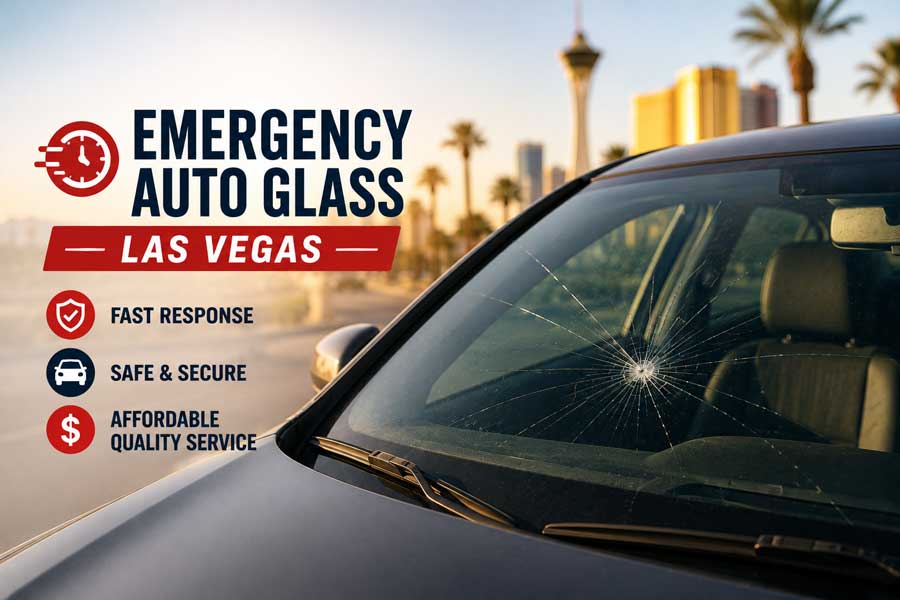
A small rock chip may be repairable if caught early. But once a crack starts spreading across the windshield, especially toward the edge or through your line of sight, it becomes more serious.
Windshield retention matters in a crash. Federal Motor Vehicle Safety Standard 212 is designed to help keep windshields retained during collisions, supporting the glass’s protective role and helping reduce occupant ejection risk.
If you’re unsure whether your windshield needs repair or replacement, read Windshield Repair vs. Replacement: Which Option Saves You More?.
3. Broken Rear Glass
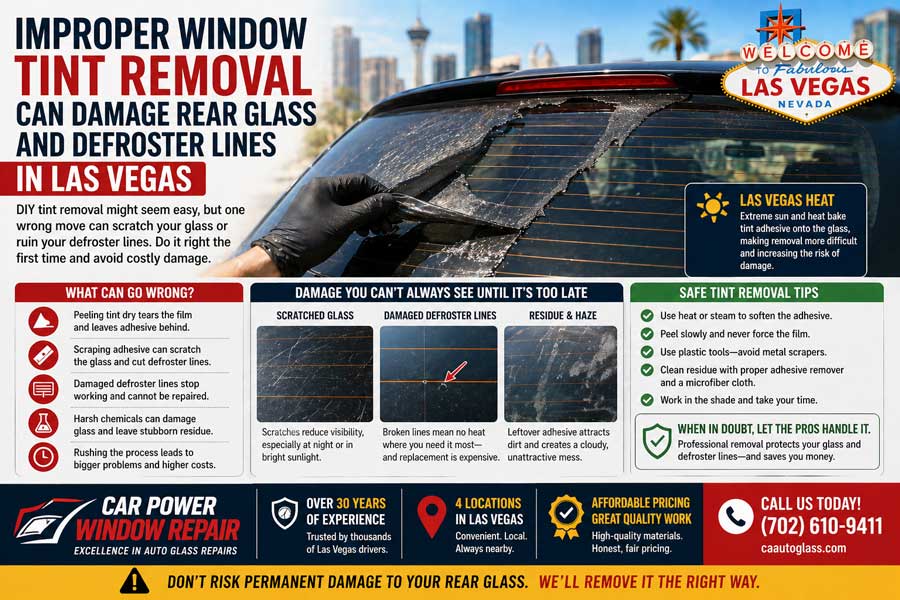
Rear glass damage can expose a large part of the vehicle interior. Many rear windows also include defroster lines, antennas, or embedded features, so replacement needs to be handled carefully.
A broken rear windshield can affect:
- Rear visibility
- Vehicle security
- Cabin comfort
- Defroster function
- Interior protection
If your back glass is cracked or shattered, start here: Rear Windshield Replacement.
4. Power Window Stuck Open
Sometimes the glass isn’t broken, but the window will not close. In Las Vegas, that can become an emergency quickly.
A stuck-open power window can leave your car exposed to heat, dust, theft, and rain. NHTSA recommends closing and locking all windows and doors when parking, parking in well-lit areas when possible, and keeping valuables out of sight. A window that won’t close makes those basic security steps impossible.
If your window won’t roll up, visit Power Window Repair.
What to Do Right Away After Auto Glass Breaks
Step 1: Get to a Safe Place
If the glass breaks while driving, stay calm. Pull over when it is safe to do so. If your view is blocked or glass is falling inside the cabin, avoid driving farther than necessary.
Step 2: Keep Hands Away from Broken Glass
Tempered side and rear glass usually breaks into small pieces, but those pieces can still cut skin, damage upholstery, and hide in carpet. Avoid brushing glass away with bare hands.
Step 3: Take Photos
Before cleaning everything up, take photos of:
- The damaged glass
- The full vehicle
- Any visible impact point
- Glass inside the cabin
- Signs of vandalism or theft
These photos may help if insurance gets involved.
Step 4: Cover the Opening Temporarily
If a side or rear window is missing, you can temporarily cover the opening with plastic. This is only a short-term solution. Avoid freeway driving with plastic over an open window whenever possible.
Step 5: Call a Local Auto Glass Shop
Once the vehicle is safe, call a local shop that can tell you whether you need repair, replacement, power window service, or mobile help.
CA Auto Glass lists emergency repair, mobile auto glass service, and quick windshield repair turnaround among its service offerings.
Mobile Emergency Auto Glass in Las Vegas
In many emergency situations, driving across town is the last thing you want to do. Mobile service can be helpful when:
- Your car is at home
- You’re stuck at work
- A window is shattered
- Your vehicle is exposed in a parking lot
- You don’t feel safe driving with broken glass
- You need help around a busy schedule
Learn more about mobile service here: Mobile Auto Glass Repair.
Repair or Replacement: Which One Do You Need?
Emergency auto glass service doesn’t always mean full replacement. It depends on the damage.
Repair may be possible if:
- The windshield chip is small
- The crack has not spread
- Damage is away from the driver’s main line of sight
- The glass is still structurally sound
Replacement is usually needed if:
- Side glass is shattered
- Rear glass is broken
- A windshield crack reaches the edge
- Damage blocks visibility
- Multiple cracks are spreading
- Defroster lines or embedded glass features are damaged
- The glass is loose, leaking, or badly compromised
A professional inspection is the safest way to know. At Car Power Window Repair, we explain your options clearly so you can choose the repair that makes the most sense for your safety and budget.
What About Insurance?
Many comprehensive insurance policies may help cover auto glass damage caused by:
- Road debris
- Vandalism
- Theft attempts
- Falling objects
- Storm damage
Whether it makes sense to file a claim depends on your deductible, the type of glass, and the cost of the repair or replacement. Sometimes paying out of pocket is simpler. Other times, insurance is the better choice.
For more information, read Auto Glass Insurance Claims Las Vegas.
Emergency Auto Glass for Different Las Vegas Drivers
For Commuters
A cracked windshield or stuck-open window can make freeway driving loud, dusty, and unsafe.
For Families
Broken glass in the cabin is especially concerning when kids are in the back seat.
For Hospitality Workers
If you work long shifts at a hotel, casino, restaurant, or resort, you can’t leave your vehicle exposed for hours.
For Contractors
A broken window can put tools, equipment, and work materials at risk.
For Rideshare and Delivery Drivers
Auto glass problems can affect comfort, customer confidence, and your ability to stay on the road earning.
How to Reduce the Risk of Future Auto Glass Emergencies
You can’t prevent every rock chip or break-in, but you can lower your risk.
Fix chips early
Small windshield damage is usually easier and cheaper to fix before it spreads.
Don’t follow trucks too closely
Construction vehicles, trailers, gravel trucks, and work trucks are common sources of flying debris.
Park smart
Choose well-lit areas when possible and avoid leaving valuables visible. NHTSA specifically recommends parking in well-lit areas, closing and locking windows and doors, and keeping valuables hidden.
Keep power windows working
A slow, crooked, or noisy power window can turn into a stuck-open window at the worst time.
Inspect glass regularly
Regular inspections help catch chips, loose trim, scratches, and seal issues before they become urgent.
Helpful read: Why Regular Auto Glass Inspections Save You Money in the Long Run.
Helpful External Resources
These non-competitor resources may help Las Vegas drivers understand safety and local conditions:
- National Weather Service – Climate of Las Vegas
- NHTSA – Vehicle Theft Prevention
- FMVSS 205 – Glazing Materials
- FMVSS 212 – Windshield Mounting
Why Las Vegas Drivers Choose Car Power Window Repair
When your glass breaks, you don’t want vague answers or surprise pricing. You want a local team that knows how to handle the problem quickly and correctly.
Drivers choose Car Power Window Repair because we offer:
- Over 30 years of experience
- 4 Las Vegas locations
- Affordable pricing
- Great quality work
- Windshield repair and replacement
- Side window replacement
- Rear glass replacement
- Power window repair
- Mobile service options
- A team that truly prides itself with excellence on auto glass repairs
Our goal is simple: secure your vehicle, explain your options, and get you back to normal as quickly as possible.
Final Takeaway: Don’t Wait on Emergency Auto Glass in Las Vegas
Broken auto glass can leave your vehicle unsafe, exposed, and stressful to drive. In Las Vegas, heat, dust, traffic, and security concerns can make the problem worse quickly.
If you need Emergency Auto Glass Las Vegas service, don’t put it off. Whether it’s a shattered side window, broken rear glass, spreading windshield crack, or power window stuck open, Car Power Window Repair is ready to help with affordable pricing, great quality work, and decades of local experience.