Same Day Auto Glass Las Vegas: Fast Help for Windshields, Side Glass, Rear Glass, and Power Windows. When auto glass breaks, most drivers do not want to wait several days for answers. You need to know what can be fixed, how soon it can be handled, and whether your vehicle is safe to drive.
Same day Auto Glass Las Vegas
That is why so many local drivers search for Same day Auto Glass Las Vegas when something goes wrong. Maybe your windshield cracked on the freeway. Maybe your side window shattered in a parking lot. Maybe your rear glass broke overnight. Or maybe the glass is fine, but your power window is stuck open and your car cannot be secured.
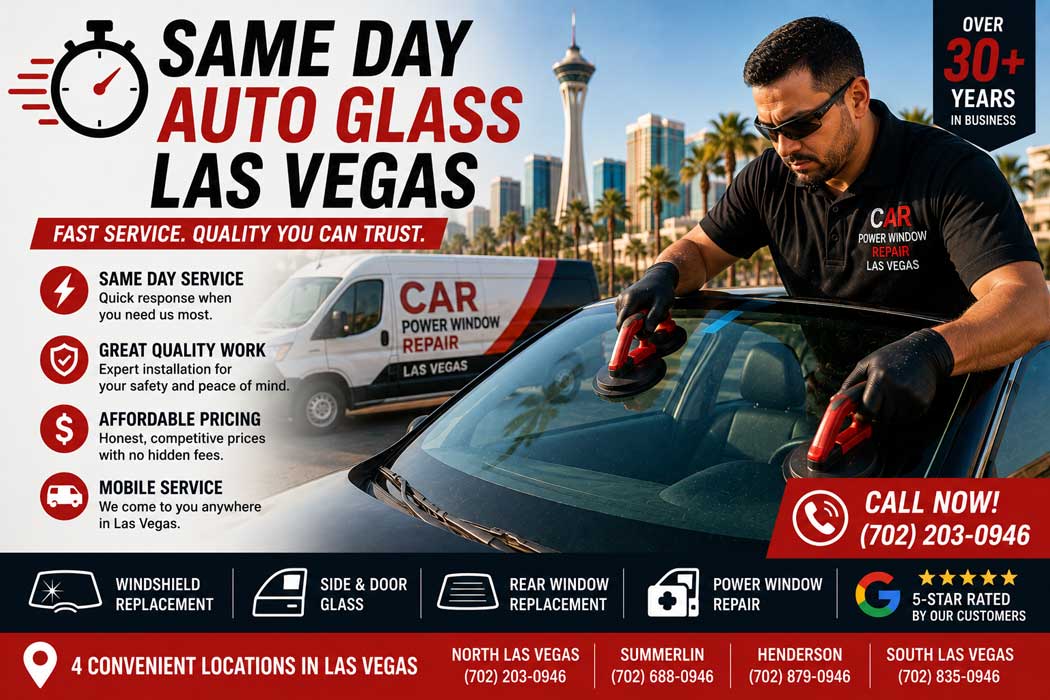
At Car Power Window Repair, we help Las Vegas drivers get fast, practical auto glass solutions with affordable pricing and great quality work. With over 30 years in business and 4 locations in Las Vegas, our team truly prides itself with excellence on auto glass repairs. The goal is simple: help you protect your vehicle, understand your options, and get back on the road with confidence.
What Does Same Day Auto Glass Service Mean?
Same day auto glass service means getting your vehicle inspected, quoted, and repaired or scheduled as quickly as possible—often the same day when the right glass, parts, technician, and service conditions are available.
Same day auto glass may include:
- Windshield replacement
- Windshield crack or chip inspection
- Side window replacement
- Door glass replacement
- Rear glass replacement
- Quarter glass or vent glass replacement
- Power window repair
- Mobile auto glass service when the vehicle qualifies
The important thing is this: same day should not mean rushed. Vehicle glass affects safety, visibility, and security. Federal glazing standards exist to help reduce injuries, preserve driver visibility, and reduce the possibility of occupants being thrown through vehicle windows during crashes. FMVSS 205 – Glazing Materials
So yes, fast service matters—but professional installation and the right recommendation matter even more.
Why Same Day Auto Glass Matters in Las Vegas
Las Vegas is not gentle on damaged glass. The National Weather Service describes the area as having abundant sunshine and summer temperatures that reach into the triple digits. That heat can stress chipped or cracked glass, especially when a vehicle sits in direct sun and then gets blasted with cold A/C. National Weather Service – Climate of Las Vegas
Same day service can help because broken or damaged glass may expose your vehicle to:
- Desert dust and sand
- Interior heat damage
- Theft risk
- Sudden wind or rain
- Glare and visibility problems
- Wind noise on the freeway
- Loose glass inside the cabin
A damaged window in Las Vegas is not always something you can “deal with next week.” Sometimes, the safest and most affordable decision is to handle it now.
Same Day Auto Glass Is Not Just for Windshields
Most people think “auto glass” means windshield only. But in real life, same day auto glass service often involves much more.
1. Side Window and Door Glass Replacement
A shattered side window is one of the most urgent auto glass problems because your vehicle is no longer secure. Whether it happens from a break-in, parking lot incident, road debris, or a failed regulator, the result is the same: your interior is exposed.
Side window damage can lead to:
- Glass in the seat, carpet, and door panel
- Dust and heat entering the cabin
- Higher theft risk
- Unsafe or uncomfortable driving
- Window track or regulator damage
If your side glass is broken, visit Car Window Replacement for more information about door glass, quarter glass, vent glass, and related replacement services.
2. Rear Glass Replacement
Rear glass damage can be stressful because it usually leaves a large opening in the vehicle. Many rear windshields also include defroster lines, antennas, or other built-in features, so the right glass matters.
Rear glass replacement may be needed if:
- The back glass shattered
- The rear window cracked from impact
- Defroster lines are damaged
- The glass is leaking or loose
- Your hatch, trunk, or cargo area is exposed
If your back glass is damaged, start here: Rear Windshield Replacement.
3. Windshield Replacement
A windshield crack may start small, but in Las Vegas heat, it can spread quickly. Once damage reaches the edge of the windshield or crosses your main line of sight, replacement is often the safer choice.
Windshield replacement may be needed when:
- A crack blocks your view
- The damage reaches the edge
- There are multiple impact points
- The windshield is leaking
- The glass is heavily pitted or distorted
- A previous repair failed
- Driver-assistance cameras may be affected
Windshield mounting also matters. Federal safety standard FMVSS 212 addresses windshield retention during certain crashes, which is why proper adhesive, fitment, and safe drive-away time are important. FMVSS 212 – Windshield Mounting
If you are unsure whether you need repair or replacement, read Windshield Repair vs. Replacement: Which Option Saves You More?.
4. Power Window Repair
Sometimes the glass itself is not broken, but the window will not move. That can become urgent fast in Las Vegas.
You may need same day power window help if:
- The window is stuck open
- The glass dropped inside the door
- The motor clicks but nothing moves
- The window moves crooked
- The switch works only sometimes
- The glass will not seal fully
A stuck-open window is also a security issue. NHTSA recommends closing and locking all windows and doors when parking, parking in well-lit areas, and keeping valuables out of sight to reduce theft risk. NHTSA – Vehicle Theft Prevention
For help with regulators, motors, switches, wiring, tracks, and stuck windows, visit Power Window Repair.
Mobile Same Day Auto Glass: When We Come to You
Mobile auto glass service can make a stressful day much easier. Instead of driving with broken glass, you may be able to have service come to your home, workplace, hotel, job site, or parking area when the repair qualifies.
Mobile auto glass may be helpful if:
- Your side window is shattered
- Your rear glass is broken
- Your windshield crack makes driving stressful
- Your power window is stuck open
- You cannot leave work
- You do not want to sit in a waiting room
- Your vehicle is parked safely in a serviceable area
Mobile service depends on the vehicle, glass availability, weather, workspace, technician routing, and type of repair. To learn more, visit Mobile Auto Glass Repair.
What Can Affect Same Day Availability?
Same day auto glass service is often possible, but a few things can affect timing.
Glass Availability
Some vehicles use common glass that may be available quickly. Others require specialty glass, built-in antennas, tint bands, acoustic glass, heating elements, or sensor areas.
Vehicle Technology
Newer vehicles may have windshield cameras or sensors for lane support, forward collision alerts, or other driver-assistance features. NHTSA explains that driver-assistance systems may rely on cameras and sensors to support features such as lane departure warning and automatic emergency braking. NHTSA – Driver Assistance Technologies
If your windshield has cameras or sensors, calibration may be required after replacement.
Location
Mobile service availability can depend on where the vehicle is parked and whether the technician can safely work there.
Weather and Heat
Extreme heat, wind, rain, or unsafe workspace conditions can affect mobile service timing and installation quality.
Insurance Approval
If you plan to use insurance, claim approval and coverage details can affect scheduling.
What to Tell the Shop for the Fastest Quote
To help the team confirm your same day auto glass options quickly, have this information ready:
- Vehicle year, make, and model
- Which window or glass is damaged
- Photos of the damage
- Whether the glass is cracked, chipped, shattered, or stuck
- Whether the vehicle is safe to drive
- Your location in Las Vegas or Henderson
- Whether you prefer mobile or in-shop service
- Whether your vehicle has cameras, sensors, tint, or defroster lines
- Insurance information if you plan to use coverage
The more accurate the details, the faster the shop can check glass availability, parts, pricing, and service options.
What to Do While Waiting for Same Day Service
If your windshield is cracked:
- Park in shade if possible
- Avoid blasting cold A/C directly on the crack
- Don’t slam doors
- Avoid rough roads
- Don’t scrub the damaged area aggressively
If your side or rear glass is broken:
- Avoid touching glass with bare hands
- Take photos before cleanup
- Remove valuables from the vehicle
- Cover the opening only as a temporary solution
- Avoid freeway driving with plastic over the window
If your power window is stuck open:
- Stop pressing the switch if you hear grinding or clicking
- Park in a secure area
- Remove valuables from view
- Avoid forcing the glass by hand
- Schedule service as soon as possible
These small steps can help prevent the damage from getting worse before the repair.
Insurance and Same Day Auto Glass
Auto glass damage may be covered by comprehensive insurance depending on your policy and the cause of the damage.
Insurance may help with damage caused by:
- Road debris
- Vandalism
- Break-ins
- Falling objects
- Storm damage
Before filing a claim, compare the repair cost with your deductible. Sometimes paying out of pocket is faster and simpler. Other times, insurance makes sense.
For help understanding the process, read Auto Glass Insurance Claims Las Vegas.
Why Las Vegas Drivers Choose Car Power Window Repair
When you need Same day Auto Glass Las Vegas, you want a local team that can respond quickly and still do the work the right way.
Drivers choose Car Power Window Repair because we offer:
- Over 30 years of experience
- 4 convenient Las Vegas locations
- Affordable pricing
- Great quality work
- Windshield service
- Side and rear glass replacement
- Power window repair
- Mobile options when available
- Honest repair vs. replacement guidance
- A team that truly prides itself with excellence on auto glass repairs
We know broken glass can interrupt your entire day. Our goal is to make the next step clear, fair, and practical.
Helpful External Resources
For safety and local driving conditions, these non-competitor resources may help:
- National Weather Service – Climate of Las Vegas
- NHTSA – Vehicle Theft Prevention
- NHTSA – Driver Assistance Technologies
- FMVSS 205 – Glazing Materials
- FMVSS 212 – Windshield Mounting
Final Takeaway: Same Day Auto Glass Should Be Fast, Fair, and Done Right
If your vehicle has broken glass, a cracked windshield, damaged rear glass, or a power window that will not close, waiting can make the problem worse.
Same day Auto Glass Las Vegas service is about more than speed. It is about protecting your vehicle, restoring visibility, securing your interior, and getting the correct repair before the damage spreads.
At Car Power Window Repair, we’re ready to help with affordable pricing, great quality work, and over 30 years of local experience—so your glass problem gets handled the right way, without unnecessary delay.